Short Suspense Thriller Story Collection: How Ladder to Murder Builds Tension Scene by Scene

Not every crime novel is written the same way. Some build through sprawling narratives, long arcs, slow reveals across hundreds of pages. Ladder to Murder is different. Patrick Gillan writes in tight, self-contained scenes, each chapter its own unit of tension, each one ending with something shifted, something lost or something quietly, irreversibly changed.
The novel opens in a graveyard at midnight. One scene. A stranger, a shovel, a body dropped without ceremony into a borrowed grave. No character introduction, no context, no comfort. By the time the brake lights disappear into the dark, the reader already knows this is not a book that will hold anything back.
That scene-by-scene intensity is what gives Ladder to Murder its particular momentum. Gillan moves between perspectives, Philippa Abbott in the church, DCI Alexander at the crime scene, Donna Bridges at the lychgate with a phone and shaking hands, and each switch resets the tension rather than releasing it. Readers who are drawn to intense suspense short fiction for the way it drops you directly into a moment and holds you there will find that same discipline running through every chapter of this novel.
The short form’s greatest strength is precision. Gillan applies that precision across 82 chapters and never loses it.


The Scenes in Ladder to Murder That Hit Like Intense Suspense Short Fiction

Some chapters in Ladder to Murder are complete dramatic units in themselves, scenes so tightly constructed that lifting them from the novel would leave them entirely intact.
The opening burial in St Ethelbert’s Old Church is one. A stranger working in silence, torchlight crossing moss-covered headstones, an owl screaming from the oaks as the car pulls away. It runs for less than two pages and establishes the entire emotional register of the novel.
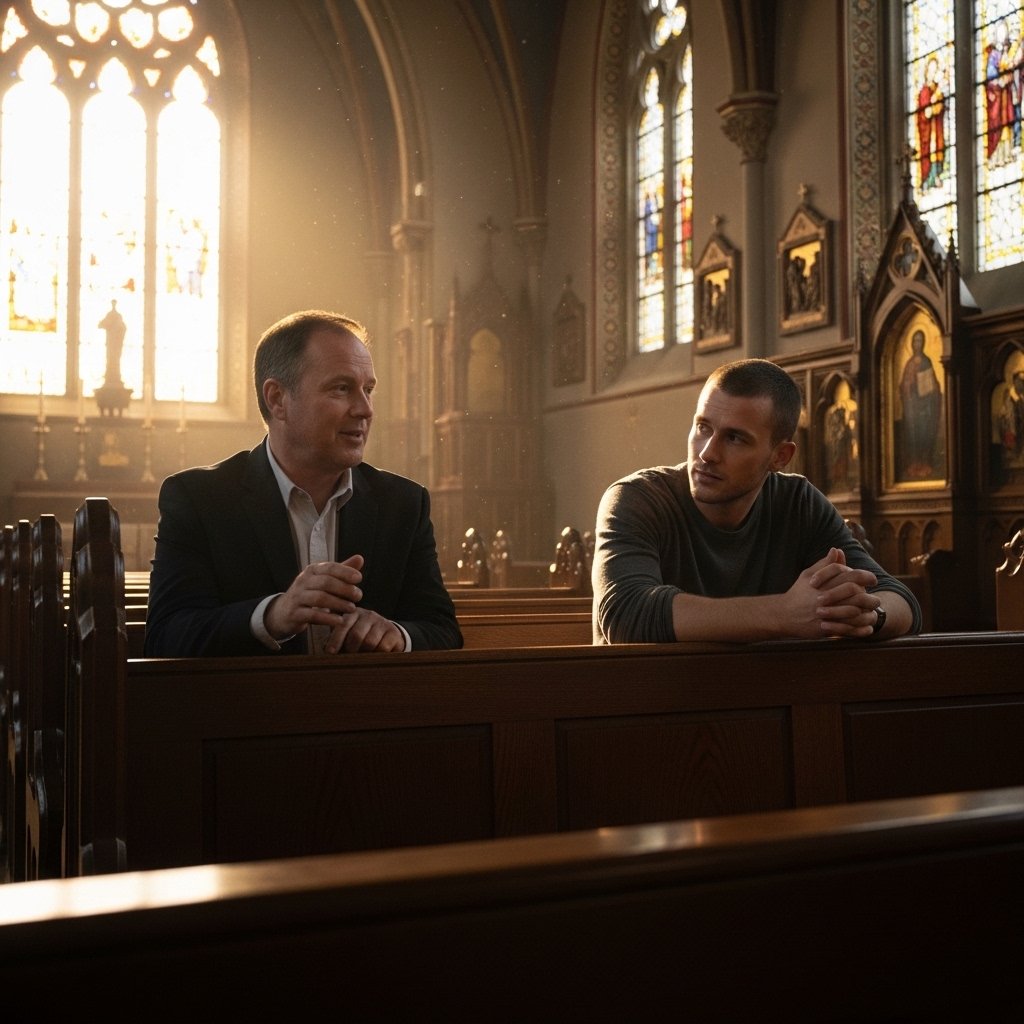
The conversation at Aylesford Priory is another. Rob de Beaumont and Brother Thomas, sitting in a sunlit chapel that smells of old paper and worn leather, talking around the thing neither of them will say directly. Rob lowers his guard. Mentions Leonard’s name. Knows immediately it was a mistake. Thomas’s response, Clarity is a dangerous thing, Rob. Not everyone seeks it, lands like a door closing. The chapter ends there. It is all it needs.
Then there is Donna Bridges at the lychgate, dialling 999 with shaking hands while Monty barks behind her, a robin landing on the gatepost with a breast the colour of blood. That scene contains humour, dread and grief in the space of a single page.
Gillan understands what short suspense fiction understands: that restraint is more effective than elaboration, and that the moment a scene ends is as important as the moment it begins.

What Makes Suspense Fiction Intense: Patrick Gillan’s Approach

Intensity in suspense fiction is not about volume. It is not about how much happens, how fast the pace runs or how high the body count climbs. It is about the gap between what the reader knows and what the characters do not, and how long that gap can be held before it closes.
Patrick Gillan manages that gap with care throughout Ladder to Murder. The reader watches Rob de Beaumont prepare for a pilgrimage, leaving the vestry tidy and his parishioners in good hands, and already knows, from the opening scene, that he is not coming back. The reader watches Jane Thomas feel vaguely watched in an empty church and cannot tell her why. The reader watches Felicity Deveraux attend meetings, offer help and smile at funerals and cannot warn anyone.
That sustained dramatic irony is where the novel’s intensity lives. It is not generated by incident. It is generated by information, by what the reader carries into each scene that the characters inside it do not have.
This is the same mechanism that makes the best short suspense fiction work. The story knows more than its characters. The reader feels the weight of that knowledge. And the only release is the moment, chapters later, when everything finally lands where it was always going to land.

The Chapter That Belongs in Any Intense Suspense Short Fiction Collection

Chapter four of Ladder to Murder would hold its own in any collection of intense suspense short fiction. It is the chapter where Monty finds the hand.
Donna is already frustrated, muddy boots, a dog that will not come, the sucking sound of waterlogged ground underfoot. She follows Monty’s bark through a private lane, through the gate of St Ethelbert’s Old Church graveyard, around the side of the Norman building. She finds him at a freshly turned grave, soil scattered everywhere, barking and pulling against the lead she is trying to clip on.
Gillan does not linger on it. He gives the reader exactly what Donna sees, no more, and moves immediately into the physical response, she staggers back, half-stumbles toward the lychgate, ties Monty to the post with shaking hands and pulls out her phone. The 999 call that follows is rendered in full, the operator keeping Donna calm with questions about the dog, the weather, how long she has had him. It is quietly brilliant, the mundane and the horrifying running on the same line simultaneously.
By the time the first police car arrives, the reader has been inside that graveyard for four pages and will not forget it.

Who Reads Short Suspense Thriller Fiction and Why Ladder to Murder Delivers It

Readers drawn to short suspense thriller story collections are usually looking for the same thing: writing that does not waste a word, scenes that land immediately, and tension that does not require a hundred pages of build-up before it pays off.
Ladder to Murder is a full novel, but it is built from that same set of priorities. Gillan does not pad. He does not over-explain. He trusts the reader to carry information between chapters without being reminded of it, and he trusts his scenes to do their work without underlining the effect afterward.
The result is a novel that moves the way good short fiction moves, in clean, purposeful units, each one doing something specific, none of them overstaying their welcome. The Facebook chapter, where Meadowhaven Chatters processes the news of the police tape going up, is three pages long and tells the reader more about village psychology than a full chapter of exposition would. The sentencing at the Old Bailey is structured like two linked short pieces, Montgomery first, then Deveraux, each with its own distinct atmosphere and emotional register.
If you read suspense fiction for the quality of the writing at the sentence and scene level, rather than purely for plot, Ladder to Murder will give you what you are looking for.

Eighty-Two Chapters. One Village. Every One Built to Hold You.

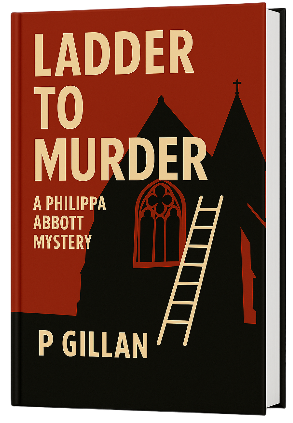
Ladder to Murder by Patrick Gillan is the debut novel featuring Philippa Abbott, a gripping, scene-driven crime thriller set in rural Kent, written with the precision and intensity that short suspense fiction demands at every page.
It begins in the dark, in a churchyard, with a stranger and a shovel. It ends in Canterbury Cathedral, in December, with snow falling and a case finally closed.
Everything in between is worth your time.