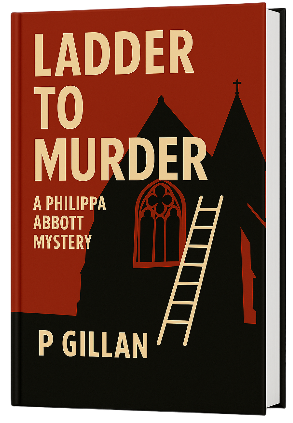
Why Gripping Suspense Fiction Stays With You Long After the Last Page
The best suspense fiction does not rely on shock. It relies on accumulation, the slow, careful build of detail that makes the eventual reveal feel not surprising, but inevitable.
Ladder to Murder works this way. Patrick Gillan seeds the tension early. A set of church keys that vanishes from the altar table. A warning letter slipped under a vicar’s door, written in Latin. A conversation in a chapel at Aylesford Priory that goes slightly too far, between two men who trusted each other slightly too much.
None of it announces itself as dangerous. That is precisely the point.
The suspense in this novel is grounded in character rather than incident. DCI Garry Alexander, a Glaswegian detective still carrying the weight of a previous breakdown, reads a scene before he
fully understands it. Philippa Abbott, retired criminal psychologist and the book’s quiet centre of gravity, notices things she does not yet have a framework for. The reader moves with both of them, accumulating unease at the same pace they do.
By the time the full picture comes into focus, a secret order of guardians, four murders, a corrupt senior police officer and a killer who never once dropped her composure, the gripping suspense fiction story has been building for chapters. The payoff is earned because the groundwork was laid with care