The Victim the Village Thought It Knew
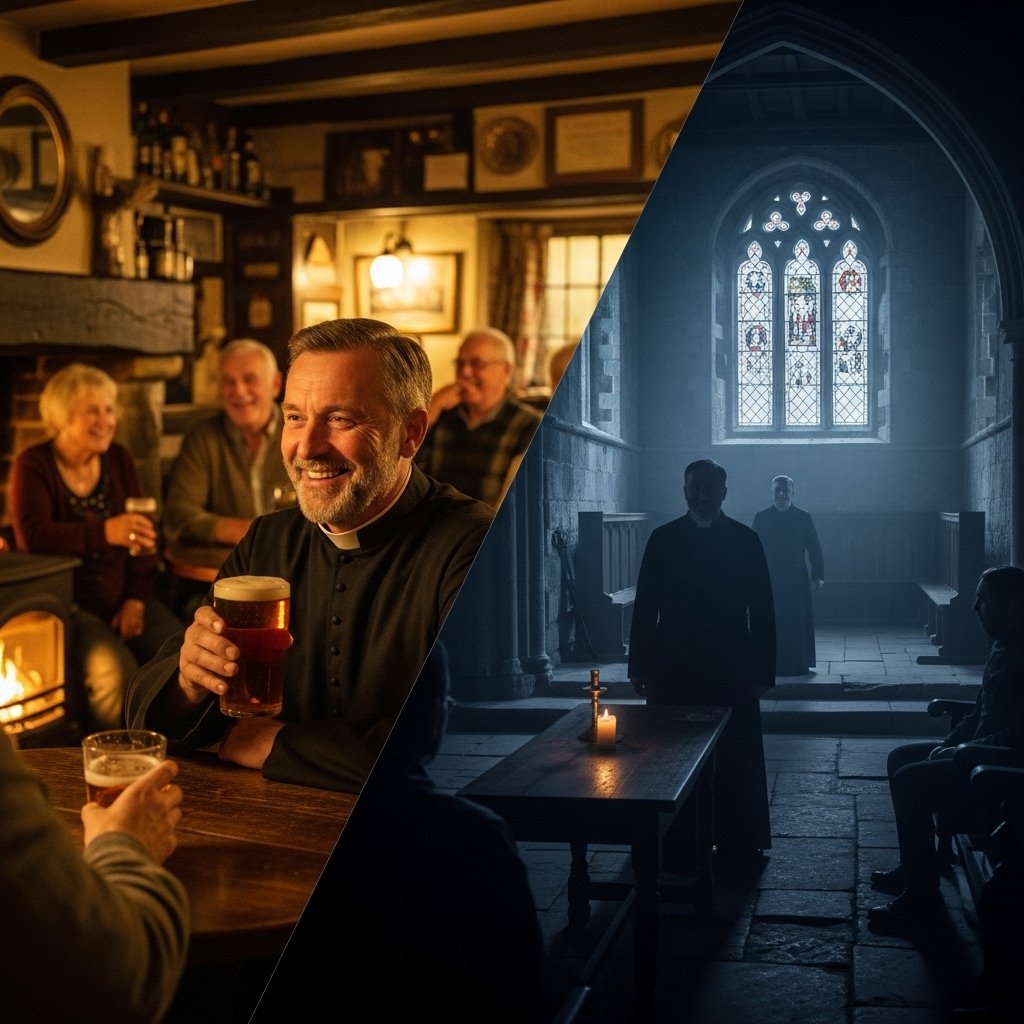
Reverend Robert de Beaumont was not easy to dislike. In Meadowhaven he was a fixture, Saturday nights at the Plough, dancing to sixties music on the jukebox, Guinness in hand, knowing everyone’s name and most of their problems. He ran a food bank, supported domestic abuse charities, spoke at Westminster focus groups, and still found time to be on the local council.
He was born into privilege, grew up at Chimneys, an eighteenth-century manor house in Surrey, went to Eton, then Oxford to read Philosophy, Politics and Economics at his father’s insistence.
Jane Thomas runs the church with a fastidiousness that borders on devotion. She sets the offertory table the night before, irons Edwin’s vestments, worries about her memory and prays quietly for Rob when she feels watched in an empty church. She is warm, loyal and more observant than anyone gives her credit for.
Donna Bridges is the one who finds the hand. She is practical, dry-humoured and unreservedly fond of Monty, despite his habit of disgracing her in public. Her son’s battle with addiction runs quietly beneath the plot, one of several threads Gillan uses to give Meadowhaven texture beyond the murder investigation.
Edwin Langley, the curate, is young and a little lost without his mentor. He is handsome, private, and wrestling with how to preach a passage about submission to a congregation that includes domestic abuse survivors. He is not a detective. He is simply someone caught in the middle of something he did not choose.
These are not stock characters placed around a plot. They are people the reader misses when the chapter moves on.